How to Improve Your Inbound Game On LinkedIn
Maybe you’ve seen your competitors post content.
Maybe you’ve heard that you can generate inbound leads.
Maybe you’re realizing SEO content marketing isn’t what it once was.
Either way, you have a gut feeling telling you, posting on LinkedIn might be a good idea. You’re not wrong. But sometimes we need the hows, whys, and whats behind our reasoning, right? Well, here it is.
Why Invest Your Time and Energy on LinkedIn
Many people are still skeptical when it comes to creating content on LinkedIn.
Understandably, it's not the easiest platform to figure out.
But as you dig a little deeper and begin to see why some people are killing it on this platform, you'll understand the hype. Here are some reasons you may want to jump on this lucrative bandwagon:
99% of Users Don't Know How to Use LinkedIn
Most LinkedIn users haven't mastered the platform's full potential, making this a great opportunity for you to stand out. By understanding and effectively using LinkedIn's features, you can gain a competitive edge in networking, content creation, and personal branding.
Affluent Audience
LinkedIn is known for its professional user base, many of whom have considerable financial resources. This makes the platform ideal for businesses and individuals who want to connect with an audience that has the capacity and willingness to invest in quality products and services.
Personal Branding Opportunity
LinkedIn offers an unparalleled platform for personal branding. And you'll hear countless people credit their success to having a solid personal brand. Why? Because it builds authority, which builds trust, which builds leverage. And the beauty with leverage? You no longer need to chase.
Global Access
78% of LinkedIn users live outside of the United States. This international exposure is invaluable for expanding your network, exploring global markets, and gaining diverse perspectives. And with remote work, you're unlimited to whom you can potentially work with.
Professional Networking
As primarily a networking tool, LinkedIn lets you connect with peers, mentors, industry leaders, and potential clients or partners. As you actively engage on LinkedIn, you can create genuine relationships that lead to collaborative opportunities.

10 Steps to Improve Your Inbound Game on LinkedIn
Got the itch? I know – once you know the potential of a certain thing, it's hard to stop learning about it. Below, I've laid out eight actionable steps you can take to start brainstorming and developing your content strategy.
1. Know Your Value
Understanding and clearly articulating your value is key in making a meaningful impact on LinkedIn. Here's how to break down this concept:
What Do You Do?
List the specific services, skills, or knowledge you offer. Knowing your unique selling point (USP) is crucial for this step. It gives you and your audience a clear picture of why you are the go-to brand for what you offer.
Who Do You Help?
Determine your target audience or the specific group of people who will benefit most from your offer. This could be a specific industry, professionals at a certain career stage, or companies facing particular challenges. Knowing your target audience ensures that your content and interactions are relevant and impactful.
How Do You Help?
Explain the manner in which your services, skills, or knowledge help your target audience. This could involve solving problems, offering guidance, or make money for their business.
Keynote: This is the foundation of your offer.
F*ck this up and you're creating content for the wrong people.
2. Update Your Profile
This aspect may seem simple, but it's amazing how often it's overlooked.
Here's how you can immediately optimize your profile:
Cover Photo
Use a professional headshot photo. Don't use photos with distractions in the background. A simple photo with your smartphone and a neutral background will do. Got an old photo you love but it's too informal? Check out some AI tools that change your outfit and background. Gioapp.ai is cool.
Headline: Articulating Your Professional Essence
Many founders have instant credibility because they have decades of experience under their belt. Adding something like CEO and Founder @(company) is plenty. If you want to add more value, adding undeniable results is a nice touch. You'll get a good sense of this below.
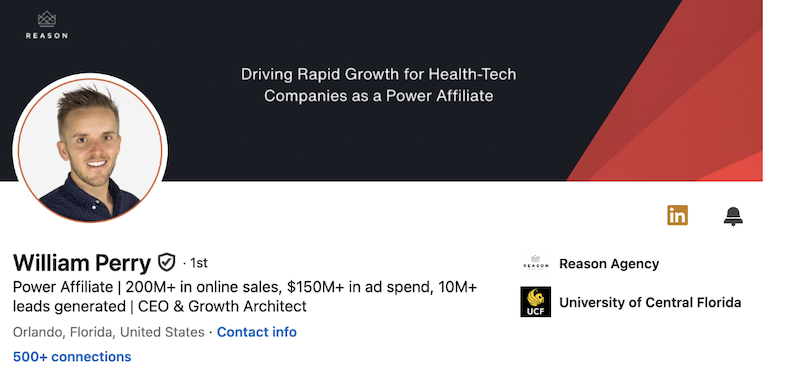
Banner: Articulating Your Professional Essence
Going back to your value, your tagline should clearly communicate what you do, who you help, and how you help them. It's not just a job title; it's a brief but powerful statement of your professional identity and value proposition.
Custom Button: Your First Call to Action (CTA)
Below your name, you'll see these buttons. Choose the add custom button to turn that third bubble into a CTA. These are templated like visit website or view portfolio, but you can add a custom button with your own anchor text.

About Section: Telling Your Story
Your About section is where you can elaborate on your professional journey, achievements, and what drives you. It's your opportunity to tell your story in a way that resonates with your audience. Remember to add how your audience benefits from your product or service and what results you can bring to the table.
URL: Personalization
Customize your LinkedIn URL to make it more memorable and professional. Ideally, it should include your name or your professional title. You can change this on the top right corner of your profile where it says Public Profile and URL.
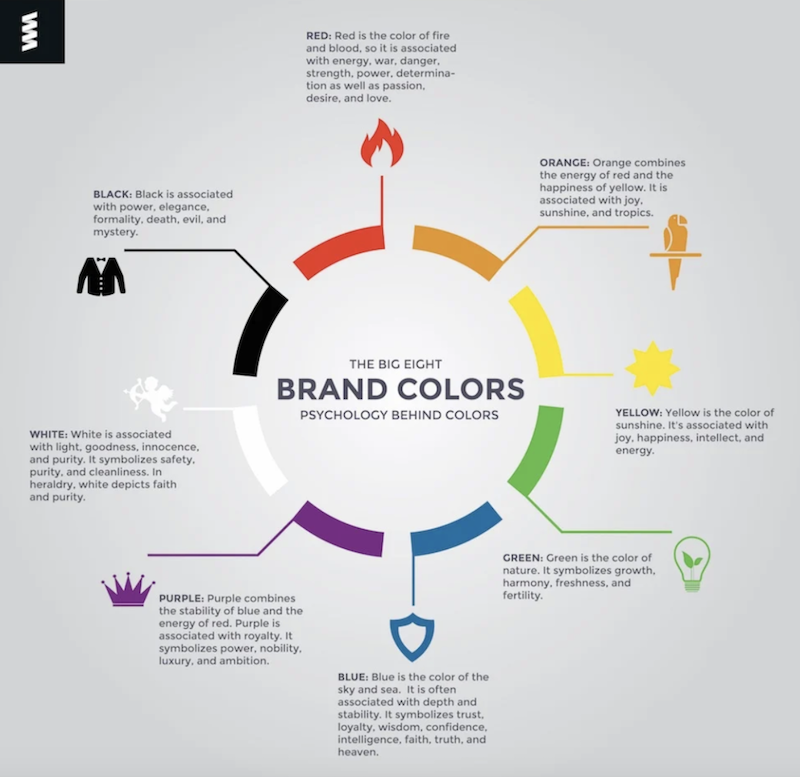
Choosing Colors: Utilizing Marketing Psychology
The color scheme of your profile should reflect your professional brand. Different colors evoke different emotions; for example, blue conveys trust and dependability, green is associated with growth and health, while orange can represent creativity and enthusiasm. Don't think too hard about it, but if you want to convey a certain image, hiring a graphic designer may be worth the investment.
Here's how brand color and psychology work to give you an idea.
Featured Section: Highlighting Key Actions
Use the Featured section to showcase your value. This is a great place to include direct CTAs like booking a consultation call, subscribing to a newsletter, or a free resource.
3. Do Some Snoopin'
Next, you'll want to do some research. Get to know the platform and see who's involved in what.
Identify Top Creators in Your Niche
Discover who the influential players are in your field. Look at their content, engagement levels, and how they interact with their audience. This can provide insights into successful strategies and content trends in your niche.
Analyze Similar Accounts
Check out profiles and content of accounts that are similar to yours. This can give you an idea of what works and what doesn’t, helping you refine your own approach.
Evaluate Top-Performing Content
Observe the community's response to high-performing content. What are people saying in the comments? What kind of content gets the most engagement? This feedback is invaluable for understanding what resonates with your audience. Kleo is a great tool for this.
Identify Your Ideal Customer Profile (ICP)
As you take a look around, you'll start to see a pattern in the type of people who are closely knit with your niche. You can then analyze your target audience's needs, challenges, and behaviors. This helps in tailoring your content and interactions to better engage and attract your ideal clientele.
4. Create a List of Influencers
Once you've got a good sense of who your social circle will be, start by compiling a spreadsheet of around 20 influencers. And categorize them into heavy hitters, micro-influencers, and ICP.
This diverse range allows you to understand different levels of influence and engagement strategies. Heavy hitters provide insight into broader trends and industry leadership, while micro-influencers and smaller accounts often have more niche audiences.
Turn to this list every time you go to like and comment each day. Instead of mindlessly scrolling, this list will keep you focused on your target audience and social circle.
The concept of social proof plays a crucial role here; as you interact with and are seen alongside respected influencers, it helps build trust and authority in your own brand.
5. Talk to People
As a platform where building relationships is what makes businesses thrive, it's little wonder then, consistent communication can help build your personal brand.
Here are some tips:
Regularly comment on posts to increase your visibility.
Make it a habit to respond to comments and messages.
Proactively send connection requests to expand your network.
Use Direct Messages (DMs) to establish more personal connections.
Draw inspiration from top-performing content to generate your own ideas.
Use LinkedIn Premium to view profiles of potential clients and send targeted messages.
As a side note: Don't troll. It's more or less common sense, but some people can be quite rude on social media. Don't be one of those people.
Also, try to be as genuine as possible. Offer insight within each comment. Saying 'great post' doesn't add a whole lot to the conversation.
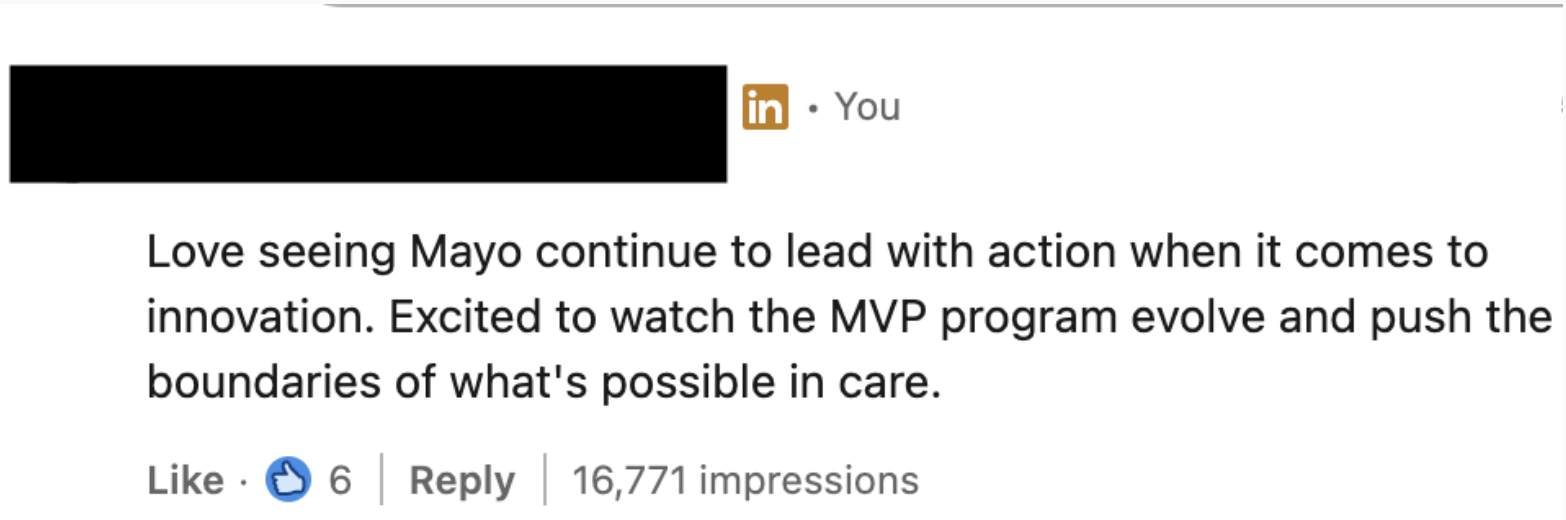
And if you don’t think engaging is important, consider this. I wrote a two-sentence comment for a healthtech CEO and got over 20k impressions by the end of the week.
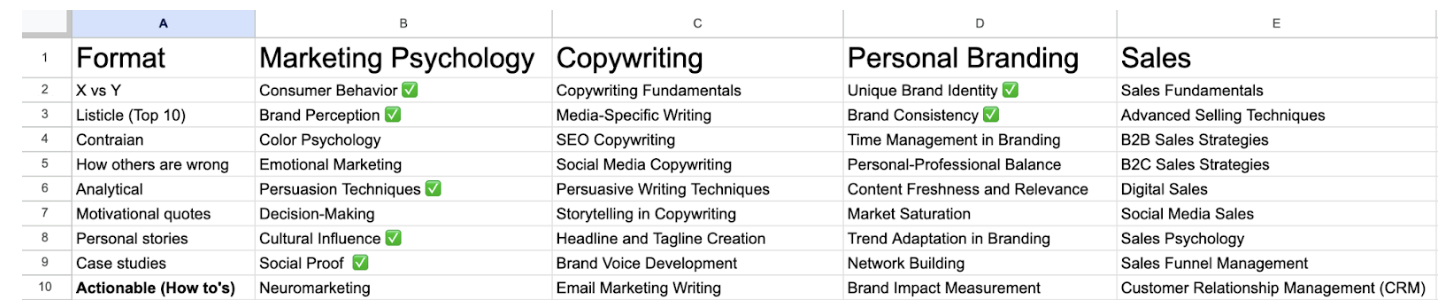
6. Brainstorm Content Ideas with a Content Matrix
After immersing yourself in your social circle on LinkedIn, you should have a clearer picture of the type of content that resonates with your audience.
That said, this is one invaluable insight you don't want to miss:
(You can use Chat GPT to help you with this.)
Take your offer. For example, Facebook Marketing, and create a list of relevant topics.
Ad Design Tips for Facebook Ads
Effective Ad Campaign Strategies
Analytics and Performance Metrics
Content Creation and Engagement
Audience Targeting and Segmentation
Then, decide which type of format you will create for each post.
This could be:
- Motivational
- Step-by-step guides
- X vs. Y comparisons
- The top 10 ways to...
- Company culture or personal stories
This isn't an exhaustive list, but it will give you bucketloads of content ideas.
You can also:
- Embellish each topic
- Repurpose your content
- Keep adding to the list using AI
As you play around with this, you can refine it as you go along and find a rhythm to your creative output.
Here's an example of what this looks like:
7. Define ICP Pain Points
This one is pretty straightforward but powerful. Think about your offer and all the problems it solves. Ask ChatGPT to create a list of pain points your target audience is facing. (Don’t forget to include who your ICP is in the prompt.) With this list, you can create content around how your offer helps alleviate those pain points.
Think case studies, problem/solution, smart vs dumb, type of posts.
8. Start Testing
This phase is about experimenting with different types of content and monitoring how they perform, so you can adapt and refine your strategy based on real data and feedback.
Here are some notes to keep in mind:
Post Varied Content: Begin by sharing different types of content to see what resonates most with your audience. Depending on your audience, they may resonate with video, carousels, or selfies. Know the type of content your audience values and try to pinpoint what works best.
Monitor Performance with LinkedIn Analytics: Use the platform's analytics tools to track the engagement and reach of each post. While impressions and follows are good metrics to follow, don't forget LinkedIn is a networking platform. The number of genuine connections is a tangible indicator of growth as well.
9. Send Connection Requests
I helped a cybersecurity founder grow his followers by 11% in just one month – all by being intentional with connection requests.
The goal here is to get your content in front of people actually likely to buy.
Here’s how to find them:
Go to the LinkedIn search bar.
Type in your ICP’s title (like “CEO”).
Click “All Filters”
Scroll down to select their industry.
Start with 25 connection requests a day. That’s the sweet spot.
10. Solidify Your Strategy
Once you test and begin to see what works, it's time to solidify your LinkedIn strategy. Consistency is key, so plan to post at least 5 times a week, preferably on the same days and times for uniformity. Commit to this schedule for 3 months to see results. This allows enough time to evaluate its effectiveness.
Final Thoughts
There are over a billion users on LinkedIn as of 2026. This means more people are waking up to the fact that LinkedIn is a powerful tool for client acquisition.
But not everyone knows how to use it properly and establish themselves as thought leaders to improve their inbound game.
Fortunately, there are resources and professionals who can show you how to leverage this platform and help you join the 1% of thriving LinkedIn users.
How I can Help
1. If you need someone to handle your LinkedIn account for you, let's talk.
2. If you want to build this out yourself but need more guidance, book a 1:1 consultation.
You can hire me and check out what past clients are saying about my work below 👇